MARTA sales taxes & Alpharetta property taxes

Sales taxes can be useful but they can also be an insidious method of taxation because it is so difficult for individuals to recognize the full cost. As discussed in this previous post the current MARTA tax in Fulton County amounts to $265 million a year and since there are about a million residents in Fulton it works out to a tax of about $265 per every man, woman and child.

If every person who lives in Fulton County was forced to write a check for their MARTA subsidy the 98% of people who rarely ride transit would be outraged. Even many of the 2% who actually ride heavy rail to work would complain about the $265 bill.

Imagine if a mother and father living in Alpharetta with two young children opened their mailbox to find a bill for their family’s $1060 share of the MARTA subsidy. But that would never happen because if it did heads down at the Gold Dome would roll faster than Richard Petty at Daytona.

But if diapers cost thirty cents more, each trip to the grocery store costs $2 more, the new refrigerator costs an extra $20 and 1% of everything else a family buys all year long adds up to $1060 they will probably never notice. It’s just a penny, right? That way MARTA gets $265 million a year and politicians get to keep their heads.

But when it comes to local property taxes people do get a bill in the mail each year. So for comparison’s sake let’s take a look at the size of Fulton County’s current 1% MARTA sales tax compared to the property taxes paid by the people of Alpharetta.

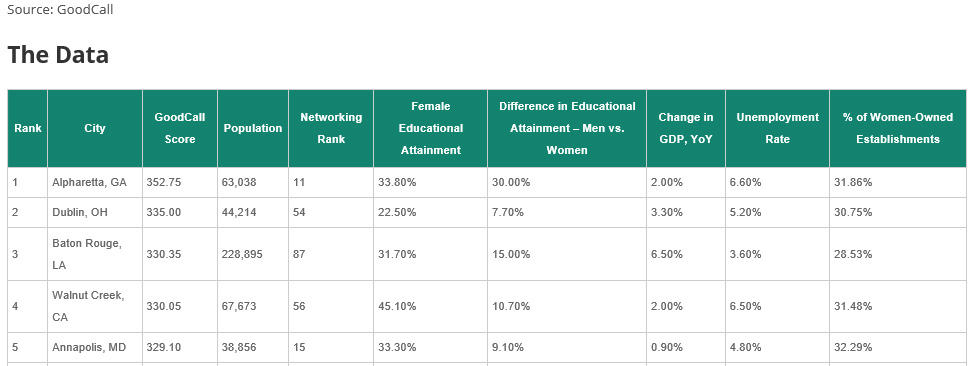
The 2016 budget for Alpharetta estimates property tax revenues of $18.8 million. With a population of 63,000 that works out to about $298 a year for every man, woman and child living in the city. The current MARTA sales tax costs about $265 per person in Fulton County. That means the property taxes in Alpharetta are only about $33 more than the cost of MARTA taxes to our average resident.

But if State Senator Brandon Beach’s 50% MARTA tax increase is enacted the cost per Fulton resident would skyrocket to almost $400 per person or $1600 for a family of four. Which means the average cost of MARTA taxes per Alpharetta resident would be $100 more a year than their property taxes.

Property taxes pay the salaries of the men and women in police cars and fire stations who work around the clock, 365 days a year to keep families, homes and businesses safe. Property taxes keep Alpharetta roads paved and traffic signals working. Local property taxes pay for nationally recognized recreation programs and parks that include an 8 mile Greenway lying along the shady banks of Big Creek.

Municipal property taxes pay a major portion of everything it takes to make Alpharetta one of the greatest places in the world to raise a family and do business. Yet if Senator Beach’s sales tax hike is enacted the average share of property taxes per resident would cost $100 less than what is collected to pay for MARTA services that only one person out of hundred people even use.

Put another way, if a $400 per person MARTA tax was distributed to the cities of Fulton County every year to cover essential services like police, fire departments and roads the City of Alpharetta could completely eliminate property taxes and have $6 million left over for transportation improvements. Now that would be a boon for economic development in North Fulton that MARTA could never provide.
 

Senator Beach Proposes 50% MARTA Tax Hike

Every man, woman and child in Fulton county has to pay a 7% sales tax which means a hundred dollar pair of shoes really costs them $107. Of that $7 tax one dollar goes to subsidize MARTA. It may not sound like much but over the course of a year it adds up to about $265 million dollars.

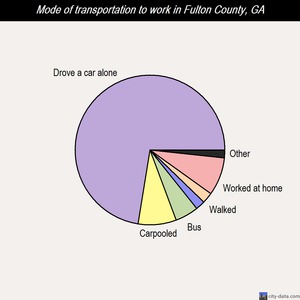
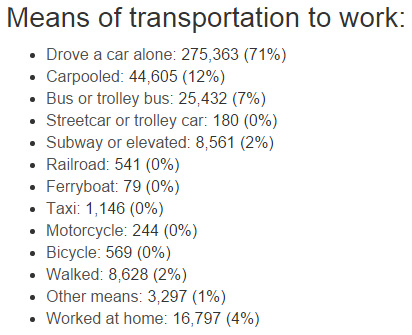
Now two hundred and sixty five million dollars is a lot of money no matter how you look at it but in a county with a million residents it might be justified if the taxes were going to something everyone uses, needs or wants. Unfortunately in a county plagued by congestion only a tiny percentage of Fulton County residents use MARTA trains during rush hour.  The census charts below demonstrate only 2% of the county’s population ride MARTA trains to work.

Fulton commute chartFulton commute stats

More people work from home or even walk to work than ride MARTA trains but we pay hundreds of millions of dollars to subsidize the trains. It is a perfect example of why Fulton County already has transportation issues. Politicians allocate transportation money based on politics rather than sound fiscal policy.

Which brings us  to this news story from 11 Alive News about Alpharetta’s own State Senator Brandon Beach who is proposing a 50% MARTA sales tax hike to expand trains into North Fulton. While I couldn’t disagree more with Senator Beach on this issue I do appreciate his consistency. He was pushing for heavy rail in his dual role as CEO of the Greater North Fulton Chamber of Commerce and President of the North Fulton CID long before he was elected to the state legislature.

But there is absolutely no objective justification for a massive tax increase to expand the least used, least efficient, least flexible and most expensive transit option available in Fulton County. Over the past few decades billions of dollars have been spent to subsidize a rail system which serves a tiny  portion of our population while the roads that support 100% of residents have been sorely neglected. Any further diversion of transportation money to MARTA trains will only make the problem worse.

A transportation tax increase of hundreds of millions of dollars on Alpharetta residents dedicated to trains that would make traffic here worse would be unconscionable so as an elected representative for 63,000 residents I will not support this effort. Instead I will vigorously oppose any legislation which would permit a 50% MARTA tax increase and encourage my fellow elected officials in Fulton County to do the same.


Growth and Traffic in Fulton County


Transportation funding will be a crucial issue for Fulton County in 2016 as mentioned in this previous article. Transportation can often be a complex issue to discuss but in Fulton County it is further complicated because it involves a million people stretched over 90 miles including the high density urban areas of Atlanta, medium density suburban areas and extremely low density rural areas concentrated at either end of the county.

The county’s demographics are as varied as the geography as well. Over the last 40 years Fulton County has become a true melting pot with people from all over the world representing every economic background imaginable.

Given these characteristics it is important to understand that there is no universal solution to solving transportation issues. Expecting a single solution that would allow a million people from varied geographic, cultural and economic backgrounds to reach unanimous consent would be unreasonable. But it is reasonable to believe that an objective evaluation of current options could result in a reasonable proposal that an overwhelming majority of residents can agree on.

The first step of that process is to objectively assess our current situation so let’s take a look at the numbers. The largest city in Fulton County is Atlanta and our metropolitan area was one of the fastest growing metro areas in the nation from the year 2000 to 2010.

As you can see in the charts below the Atlanta metro population increased by more than 1.1 million people between the last two censuses taken. The population of Atlanta actually decreased slightly over that decade but the population of Fulton county as a whole increased by more than 100,000 people.

Fulton growth 00-10Atlanta-MSA comparison

In the year 2000 Roswell and Alpharetta were the only cities which existed in North Fulton county but they only accounted for 130,000 of the 297,000 people who lived in the area. The other 167,000 residents lived in areas of unincorporated Fulton County until the municipalities of Sandy Springs, Johns Creek and Milton were formed.

The formation of the new cities took place before the 2010 Census which showed the population of North Fulton to be over 347,000. So over ten years there was a total increase of approximately 50,000 residents in the region which equals a 17% growth rate.

That means North Fulton County has been one of the fastest growing areas in one of the most rapidly growing metropolitan regions in the United States over the last 15 years. So it is only natural an area experiencing such growth would also experience growing pains. In North Fulton the growing pain most often complained about is rush hour traffic.

And while traffic is definitely an issue most areas only experience congestion for a few hours a week. In Alpharetta we generally have complete mobility for about 20 hours a day during the week and any time on the weekend. During the summer when schools are out there is hardly any rush hour at all in most areas.

For example on an average Tuesday morning at 11:00 a.m. a person can drive anywhere in Alpharetta in about 20 minutes. They could get to I-285 on GA 400 in about thirty minutes or even reach Hartsfield Airport in less than an hour.

So as we assess infrastructure needs in North Fulton county it is important to realize that most roads flow freely except for about 4 hours a day, five days a week. The other 88% of the time we already have an abundance of transportation capacity.

The issue North Fulton faces isn’t really a lack of road capacity but rather a problem of poor traffic flows during peak hours. The distinction won’t make you feel better when you’re  sitting through 3 cycles of a red light to get through an intersection during rush hour… but we have to identify the right problem if we want to find the right solution.

However as we discuss what to do about traffic in 2016 let us not lose sight of the fact that it is only an issue because North Fulton provides one of the most attractive places in the world to live, raise a family and do business. As a region we have successfully created a place where people and companies from all over the world want to be. That is a good thing and we should not take it for granted.

Success does bring challenges but they are the challenges we should welcome as we work to resolve them.


North Fulton Transportation Funding 2016

The year 2016 promises to be a defining one for the City of Alpharetta and our neighbors in North Fulton County. In Alpharetta we expect to see construction begin on the land in front of City Hall as well as hundreds of homes and townhomes in the surrounding area. Construction of the second phase in Avalon has begun and we expect to see a new convention center take shape along with the hotel, stores, restaurants and apartments also planned on the site.

Around North Fulton our neighbors are also expecting great things. Sandy Springs has begun construction of its own town center and is welcoming the North American Headquarters for Mercedes to town. Roswell is working hard to reinvigorate their beautiful historic areas with new growth while the relative newbies of Johns Creek and Milton are in various stages of creating their own visions of their future.

These are exciting times to live and do business in North Fulton. We are blessed.

And as all of these great things are going on there is an underlying discussion taking place that will affect us all. How will we work as a region to build and maintain the roads and infrastructure needed to accommodate this growth and development?

For the past two decades North Fulton has experienced tremendous growth but the network of roads and infrastructure have not grown accordingly. Anyone who has driven in other metropolitan areas knows that traffic in North Fulton is not as bad as most other comparable cities but it is still an important issue.

That is why the Georgia state legislature passed House Bill 170 last year which raised taxes to fund infrastructure projects at the state level. The bill was heavily publicized after its passage but many people in North Fulton County still don’t know about a seldom discussed feature of the legislation.

HB 170 allows Fulton County to hold a county wide referendum to authorize an additional 1% sales tax increase for funding local transportation projects. There has been media coverage about this lately but many people still don’t realize how this discussion will impact our region for decades to come.

Current projections show that a 1% sales tax increase for 5 years could raise more than $83 million to be used for transportation projects in the city of Alpharetta alone. The total amount projected for all of North Fulton would be more than $500 million. That would approximately double the amount cities currently have to address transportation projects and could make a huge dent in the backlog of projects which have accumulated as fast growing cities struggled to keep up.

But will residents vote for a large tax increase if it’s for transportation? Would the money go to fund road improvements or will some of it go to pay even more than the current 1% MARTA sales tax subsidy? Would the tax increase be limited to 5 years as proposed in the legislation? Or will the county and cities agree to extend the tax for 40 years to allow bonds for expanding MARTA?

These are all questions that have yet to be answered. However if the referendum is going to be placed on the November ballot these questions and many others will have to be answered soon. And those answers will go a long way in determining what the City of Alpharetta and North Fulton County look like for the next 10, 20, even 50 years.

So over the next few months I intend to explore many of the questions posed by the proposed Tsplost tax increase proposal. Hopefully this will be a constructive forum for us to discuss what promises to be the most important issue of 2016, North Fulton Transportation funding.


Millennials Move to Suburbs – “Cities are just a temporary place to land”

Quality-of-Life-Sioux-Falls-SD-500x332

Found an interesting link on Twitter today thanks to Jon Ray. ( aka @BKEGa1 ) The post was an exploration of why members of the Millennial generation are following previous generations into the suburbs as they get ready to settle down.

The article was written by Emily McMackin and posted on businessclimate.com. You should read the whole thing here but below are a couple of key passages:

Between 2010 and 2013, the number of 20- to 29-year-olds in the U.S. rose by 4 percent, but the percentage of residents in this demographic living in core cities grew by only 3.2 percent, the study noted. Why are cities losing 20-somethings, while suburbs and smaller towns are gaining them?

***************

They see the suburbs as an ideal place to settle down, and tend to view the urban core of cities as just a temporary place to land. Much of their reasoning stems from the desire to own their own homes or start families of their own – and wanting more space to do that.

This shouldn’t be surprising to anyone who realizes that big cities are less than ideal for raising a family. Yet many people in the development community continue to propagate the silly notion that Millennials are going to forego the superior public schools, more affordable single family homes and lower crime rates of the suburbs when they get ready to settle down.

Right now Alpharetta is blessed to be one of the greatest places in the state of Georgia to do business and raise a family. As long as we continue to grow and change in a manner consistent with those qualities the Millennial generation and their successors will continue to move here when they are ready to settle down. Our quality of life and property values will continue to improve accordingly.

However there is tremendous pressure from some in the business community and political arena to change Alpharetta into the next Midtown, Buckhead or Sandy Springs. They speak tirelessly of the impending doom suburbs will face if they don’t attract Millennials who are still at a stage in life when they are more interested in bar hopping than house shopping.

But the reality is that if Alpharetta becomes just another concrete jungle at the end of a MARTA line it will force Millennials to move even further from the city of Atlanta when they want to escape the high cost of living, miserable schools and crime that plague urban centers. The irony is that the urbanization of places like Alpharetta actually forces people to spread further out creating more of the sprawl so many urbanists loathe.

Alpharetta, from “Solid Gold” to “Bunch of Old White Guys” in 30 seconds

Recently I attended the “North Fulton Opportunity Outlook” event held in the city of Alpharetta. The forum was hosted by the Council for Quality Growth, a not-for-profit trade association comprised of developers, contractors, engineers, architects, planners, law firms and bankers–anyone with an interest in growth and development.

The event was promoted as an economic development forum to provide an update on development opportunities in North Fulton county. It was co-hosted by the Progress Partners initiative which is partially funded with Alpharetta taxpayer money so I attended in support of the effort.

It was expected it to be an upbeat, informative discussion about the many exciting opportunities in our region. For the most part that was the case. Nearly all of the participants were professional and positive as they discussed the unique quality of life, business climate and cooperative local governments that attracted their businesses and continue to help them thrive.

The lone exception was Mark Toro, managing partner for North American Properties, who chose to insert racially charged comments about the people of North Fulton into his own personal diatribes. It was disturbing to hear someone who has benefited so much from the support of this community use the occasion to insult the people who live here.

Mr. Toro introduced himself by saying,” I am the self appointed president of the Keith Parker (MARTA CEO) fan club, frequent MARTA rider… advocate… messiah” and spent most of his time pleading for billions of dollars in higher taxes that could bring MARTA trains to Avalon’s doorstep. While Mr. Toro’s introductory spiel was conspicuously self serving in a forum designed to be about investing in North Fulton it was the way he framed the remainder of his comments that was most disturbing.

In response to a question about why companies should invest in Alpharetta Mr. Toro spoke of our excellent demographics and said, “this is a solid gold community, strong… financially strong, stable and forward thinking”. He even added that collaboration with the city of Alpharetta had been “phenomenal”.

Yet just seconds after saying Alpharetta was “solid gold” Mr. Toro turned around and used racially charged comments to explain resistance to his eight billion dollar tax increase. Speaking about MARTA expansion once again he said, “I’ve heard it said. You’ve all heard it said. Some of us have even said it ourselves. The train goes both ways and we don’t want those people out here.”

This was a public forum where developers, investors, elected officials and economic development professionals had been invited to hear about opportunities for investing in this community. For Mr. Toro to falsely insinuate that opposition to his tax increase and his “urban-burb” vision of their city’s future is caused by racism was disgusting and inappropriate. But he didn’t even stop there.

Mr. Toro went on to attack the community leaders he had just praised in his comments moments earlier. “And the fact that the leadership of this community is all a bunch of old white guys like me is a problem!“, he continued.

Bunch of old white guys. So in a matter of seconds this community went from “solid gold”, “forward thinking” and “collaborative” to a place where “we don’t want those people out here” led by “a bunch of old white guys” who are the “problem”.

How could that be? What could have possibly changed Alpharetta from “solid gold” in one breath to “a bunch of old white guys” in the next? Actually the only thing that changed was that in one breath Mr. Toro spoke about everything this community has done to make his investment successful and in the next he lashed out at those very same people because they don’t embrace Mr. Toro’s self serving goal of turning Alpharetta into an urban mass transit hub.

Over the last four years the people and leadership of North Fulton county have bent over backwards to support Mr. Toro and the investment North American Properties has made here. Alpharetta revised municipal codes and gave them competitive advantages over every other commercial property owner in town. The city hired new staff and paid thousands of dollars in overtime to facilitate their extremely aggressive construction schedule.

When North American went to the Fulton County Development authority for a tax abatement that cost Alpharetta taxpayers millions of dollars without even letting us know we absorbed that loss. When North American failed to live up to their promise to build hotels in the second phase of Avalon it was the City of Alpharetta who committed $42 million of taxpayer money to support a convention center and hotel within their development .

Yet despite everything the people of North Fulton have done for Mr. Toro it hasn’t been enough. Mr. Toro still seized the opportunity to insult his hosts in front of a large group of investors, economic development professionals and elected officials who were invited to hear about opportunities here. How disappointing.

But the good news is that Mr. Toro’s comments at the North Fulton Opportunity Outlook were informative. They told the people of North Fulton everything we needed to know about the kind of man he is.

Editor’s note:

Despite Mr. Toro’s comments North Fulton remains a diverse community. People from all over the world call Alpharetta home because of our unique blend of incredible business environment combined with an exceptional quality of life and great schools.

Statistically Alpharetta is every bit as racially diverse as the Atlantic Station development Mr. Toro recently sold in downtown Atlanta and even more diverse than that of Decatur, GA. The supporting census data is available online at citydata.com

MARTA gets money to promote high density development

050519 - ATLANTA, GA -- MARTA maintenance crews work on clearance testing trains at the new MARTA Armour Rd. maintenance yard. (BILLY SMITH II/AJC staff)

050519 – ATLANTA, GA — MARTA maintenance crews work on clearance testing trains at the new MARTA Armour Rd. maintenance yard. (BILLY SMITH II/AJC staff)

Todays AJC contains an article explaining that the Federal Transit Administration is giving MARTA money to foster high density developments which will make traffic worse and justify the expansion of routes not dense enough for heavy rail yet. Click on the picture above to read the whole thing. Below are two excerpts:

MARTA and the Atlanta Beltline have been chosen to receive federal grants to help spur denser development around future transit lines, the Federal Transit Administration announced Tuesday.

MARTA was awarded $1.6 million, while the Beltline received $500,000 as part of a pilot program of the FTA. The money cannot be used to build future transit lines or buy the rail cars or streetcars that would run on them.

*******************

It must be used to plan and promote future development of businesses and homes along proposed transit lines – the kind of development that will attract built-in customers for those transit lines one day. (Think high-rise office buildings, condos and apartment towers.)

Such “transit-oriented development” or “transit supportive development” is helpful in obtaining future FTA grants, because it demonstrates that the new trains or streetcars would be able to draw riders, said Janide Sidifall, a senior project manager for MARTA.

While the money is designated for MARTA’s I-20 corridor the article specifically mentions Alpharetta as a possible alternative for expansion.